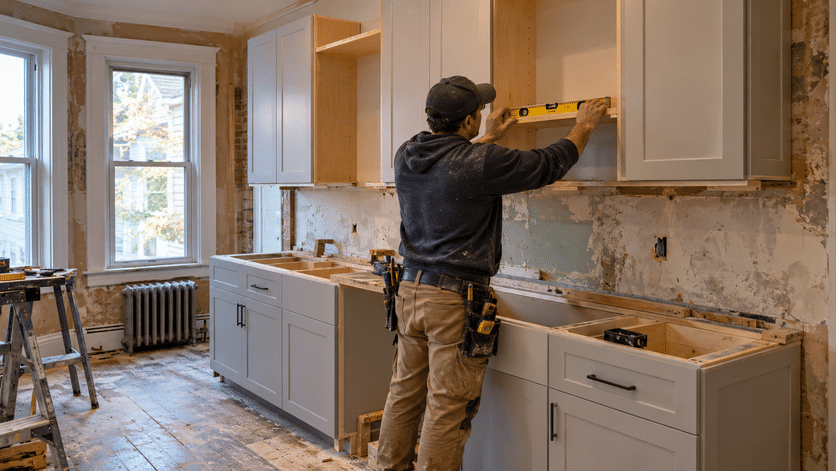
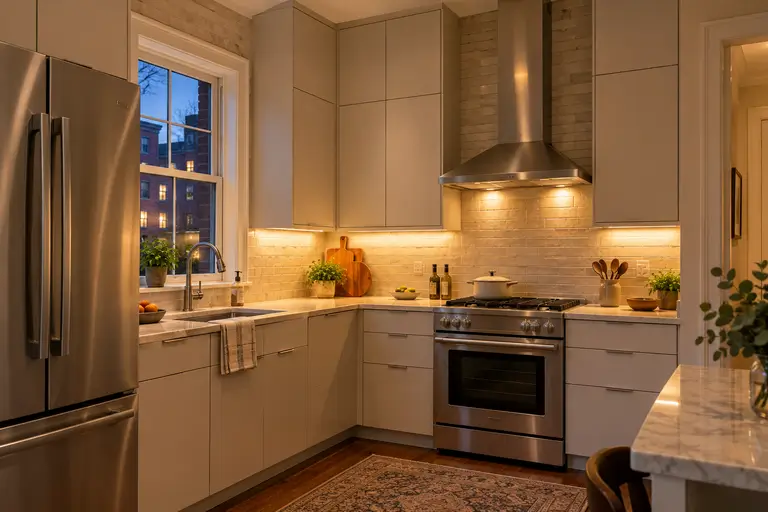
Custom cabinetry is a five-figure, months-long commitment, and the maker you choose matters more than the door style you pick. Get the maker right and the rest follows. Get it wrong and you’re living with gaps, delays, and finish problems for years.
The trouble is, most homeowners don’t know what to ask. So here are nine questions that separate the pros from the problems, plus the red flags that should end a conversation early.
Key Takeaways
- Vet a maker on nine things: portfolio, design process, materials, wood moisture, who installs, lead time, payment schedule, change orders, and warranty.
- Reputable shops use milestone payments, be wary of large upfront deposits or full pre-payment (Angi, 2026).
- Unacclimated wood warps, causing gaps and loose hinges, a fast competence test most buyers never use.
- The biggest red flags: no shop drawings, subcontracted installation, and no references.
1. Can I see your portfolio and recent references?
A real maker shows finished, local projects and offers references from the last 6 to 12 months. Ask for both. A portfolio proves they can build; recent references prove they’re still building well and communicating with clients. Vague answers or only years-old photos are a warning sign.
Look for work that resembles your project in scope and style. Then actually call the references and ask about timeline, surprises, and how problems got handled. You can browse our completed work in the Fabwright gallery to see the kind of range a custom shop should be able to show.
2. What’s your design process — will I get shop drawings?
Expect a consultation, measured drawings, and often 3D renderings before anyone cuts wood. Shop drawings are the contract between what you picture and what gets built. Without them, you’re trusting memory and verbal agreements on a five-figure project, and that’s how expectations and reality drift apart.
Ask how much input you’ll have and how revisions work. A modern shop should be able to show you the design before it’s committed to material. We model every project in Microvellum and Cabinet Vision so the drawings match the finished cabinets to the millimeter, no surprises at install.
3. What materials and wood species do you use?
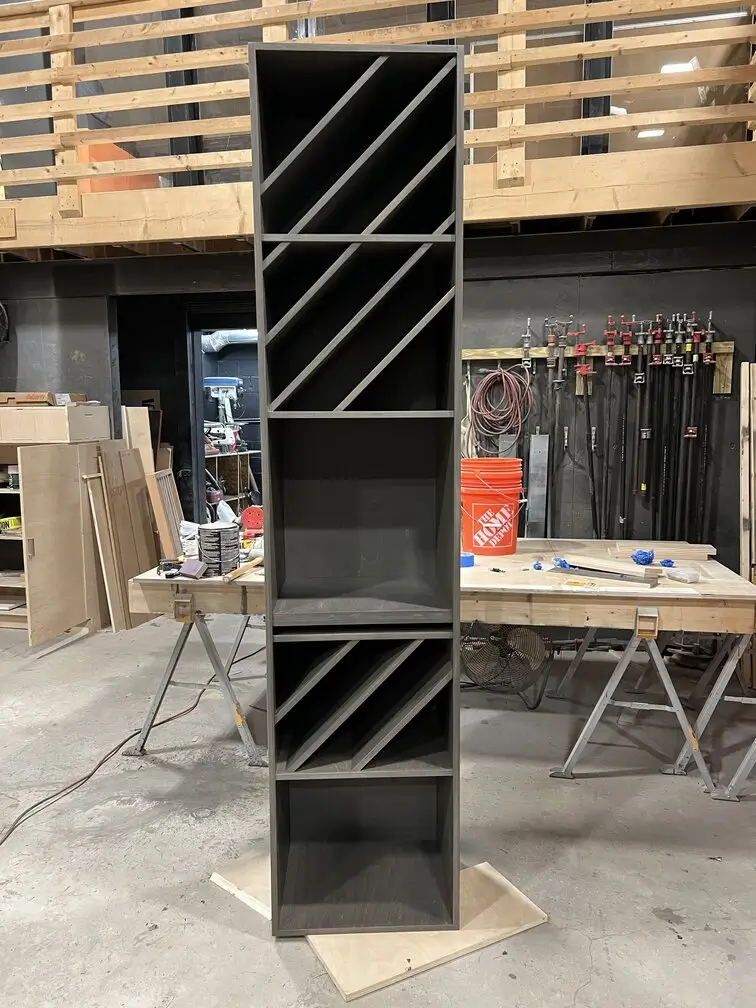
Ask about box construction, solid wood versus veneer, and finish type, material quality drives durability. There’s a real difference between a plywood box and a particleboard one, and between a sprayed conversion-varnish finish and a brushed one. A good maker explains the tradeoffs instead of dodging them.
This is also where finish strategy comes up. If you haven’t settled on a look, our guide to paint-grade vs. stain-grade cabinetry breaks down the cost and durability differences. The point of the question is simple: a maker who can talk fluently about materials is a maker who works with them every day.
4. Do you check the wood’s moisture content?
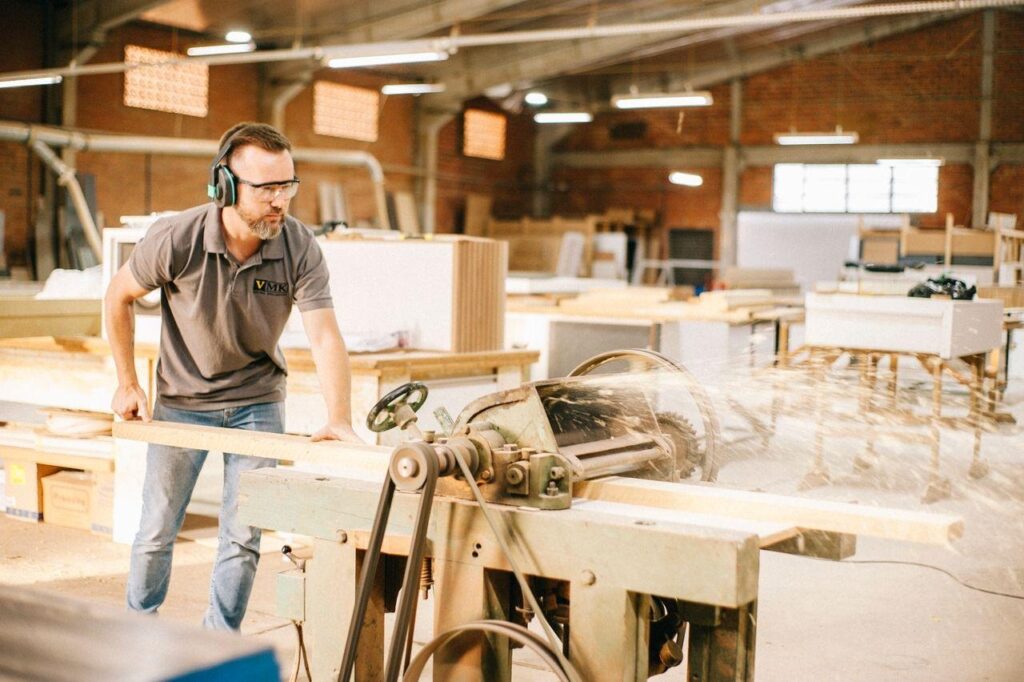
This is the question almost nobody asks, and it’s one of the fastest ways to tell a real shop from a flipper. Wood that isn’t properly acclimated and moisture-checked will move after install, causing warping, gaps, and loose hinges. The answer tells you whether they understand their material.
In New England, this matters more than almost anywhere. Our humidity swings hard between a damp summer and a bone-dry, heated winter, and cabinets built from wood that wasn’t acclimated to that range will telegraph the movement within a season or two. When you ask about moisture content and the maker has a real, specific answer, that’s a shop that’s been burned by it before, and learned.
5. Who actually installs the cabinets?
In-house installation beats subcontracting, because the people who built the cabinets can fix issues on the spot. When the maker installs their own work, accountability stays in one place. When install is handed to a third party, problems become a game of “not my job” between two companies, with you in the middle.
Ask directly: will your team install, or do you sub it out? In-house installers know how the cabinets were built and can make adjustments immediately, which matters most in older Boston homes where no wall is truly square.
6. What’s the lead time — and your current backlog?
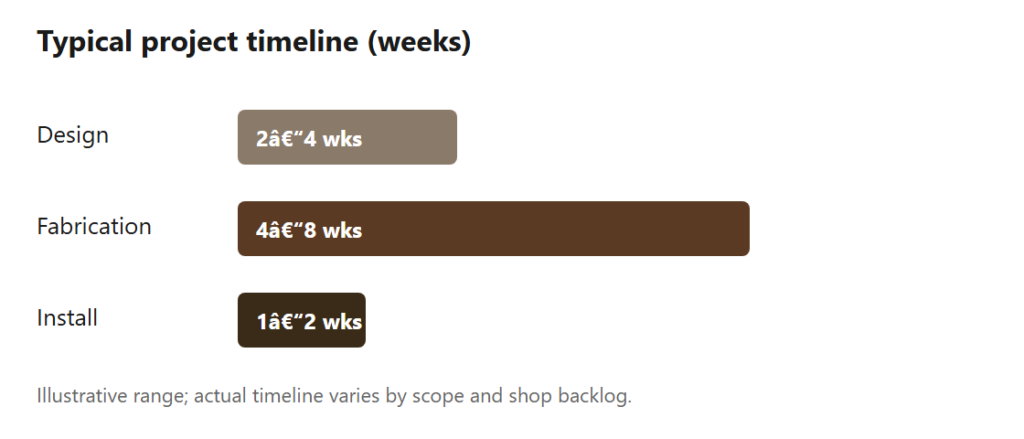
Custom cabinetry commonly takes several weeks to a few months, and you want start and completion dates in writing. The honest answer depends on scope and the shop’s current backlog, so ask about both. A maker who promises a suspiciously fast turnaround is either between jobs or about to over-promise.
The table below shows how a typical project breaks down across phases. Demand is part of the picture too, with U.S. remodeling spend hitting a record ~$524 billion in early 2026 (Harvard JCHS, 2026), good shops carry real backlogs, and that’s usually a good sign.
7. What’s the payment schedule?
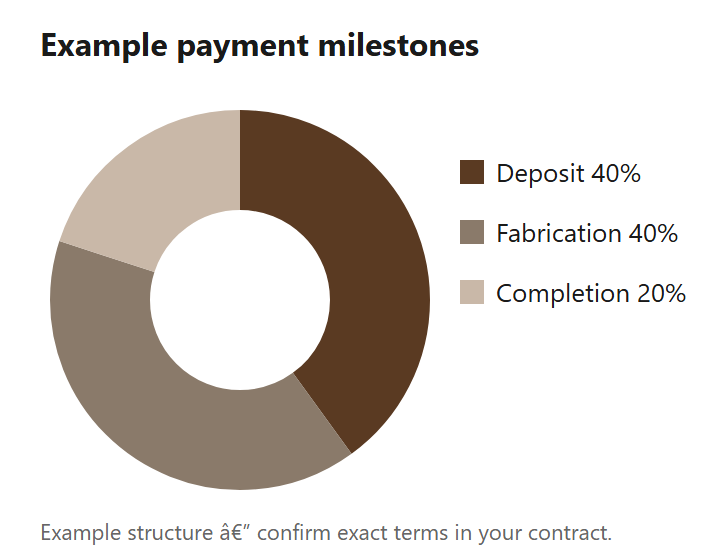
Reputable shops use milestone payments tied to project phases, not a large upfront sum or full payment before the work is done (Angi, 2026). Angi notes that a request for more than 50% up front is a red flag. A reasonable structure might be a deposit to start, a payment at fabrication, and a balance at completion. The deposit protects the shop’s material order; the final payment protects you.
From our shop: We tie payments to milestones for a reason, it keeps both sides honest and gives you leverage if something isn’t right. If a maker asks for most of the money before they’ve cut a board, slow down. That structure puts all the risk on you. A typical breakdown looks like the split below.
8. How do you handle changes and overruns?
Look for written change orders that get your approval before any extra work proceeds. Projects evolve, you’ll want to tweak something, or the shop will hit a surprise behind a wall. The question is whether those changes are documented and priced up front, or sprung on you in the final invoice.
A maker with a clear change-order process is telling you they’ve run enough projects to have systems. Ask what happens if the project goes over budget and who has to sign off. “We’ll figure it out as we go” is not an answer you want on a five-figure job.
9. What warranty do you offer?
A workmanship warranty signals a maker who stands behind their work, and you want the terms in writing. Custom cabinetry should last decades, so a shop confident in its build will back it. The absence of any warranty is a quiet admission that they expect problems and don’t intend to own them.
Ask what’s covered, for how long, and how a claim actually works. Pair the warranty answer with their references from Question 1, a maker with strong reviews and a real warranty is showing you both the track record and the guarantee. Our own work is backed by the reputation behind our 5.0 ratings on Angi and HomeAdvisor.
Red flags to walk away from
If you see these, keep looking, no matter how good the price sounds. A low bid that comes with these traits usually costs more in the end.
- Large upfront deposit or full payment before work begins.
- No shop drawings or refusal to show a design before building.
- Subcontracted installation with no accountability.
- No references or only old portfolio photos.
- Vague pricing with no itemized breakdown.
- No written warranty.
Ready to vet a Boston cabinet maker? Book a consultation with Fabwright and put these nine questions to us directly, we’ll answer every one, in writing.
Conclusion
Choosing a custom cabinet maker comes down to evidence: a real portfolio, real drawings, real materials knowledge, and real terms in writing. Ask the nine questions, watch for the red flags, and the right shop will make itself obvious.
- Milestone payments and written change orders protect you on a five-figure project.
- The moisture-content question is a fast competence test, especially in New England.
- In-house installation and a written warranty keep accountability in one place.
Before you hire, it helps to understand what custom cabinetry costs and whether custom cabinets are worth it. When you’re ready to vet a maker, start a conversation with our team.
Frequently Asked Questions
How long does custom cabinetry take in Boston?
Most custom cabinetry projects run several weeks to a few months, depending on scope and the shop’s backlog. Design and approval take a few weeks, fabrication is the longest phase, and installation is relatively quick. Always get start and completion dates in writing rather than a vague verbal estimate.
What’s a normal deposit for custom cabinets?
A reasonable deposit covers the shop’s material order to start your job, not the majority of the total. Reputable makers use milestone payments tied to phases, with the balance due at completion; expect a deposit in the 10–50% range, and treat a request for more than half up front as a red flag (Angi, 2026).
How do I tell custom from semi-custom cabinetry?
Custom cabinetry is built to your exact dimensions, materials, and specifications; semi-custom modifies stock sizes and configurations. Custom costs more but fits spaces stock can’t, odd walls, full-height runs, and the out-of-square realities of older Boston homes. Ask the maker which they actually offer before comparing quotes.
Should the cabinet maker handle installation?
Ideally, yes. When the shop that built your cabinets also installs them, accountability stays in one place and adjustments happen on the spot. Subcontracted installation splits responsibility between two companies. In-house installers also understand how the cabinets were built, which matters in homes where walls aren’t square.
Sources
- Angi, What Are Standard Contractor Payment Schedule Options?, retrieved 2026-06-17, https://www.angi.com/articles/what-are-standard-payment-terms-home-remodeling.htm
- Angi, How Much to Pay a Contractor Upfront, retrieved 2026-06-17, https://www.angi.com/articles/how-much-should-i-pay-general-contractor-prior-starting-job.htm
- Harvard Joint Center for Housing Studies, Remodeling Growth Set to Downshift in Late 2026 (Leading Indicator of Remodeling Activity), retrieved 2026-06-17, https://www.jchs.harvard.edu/press-releases/remodeling-growth-set-downshift-late-2026