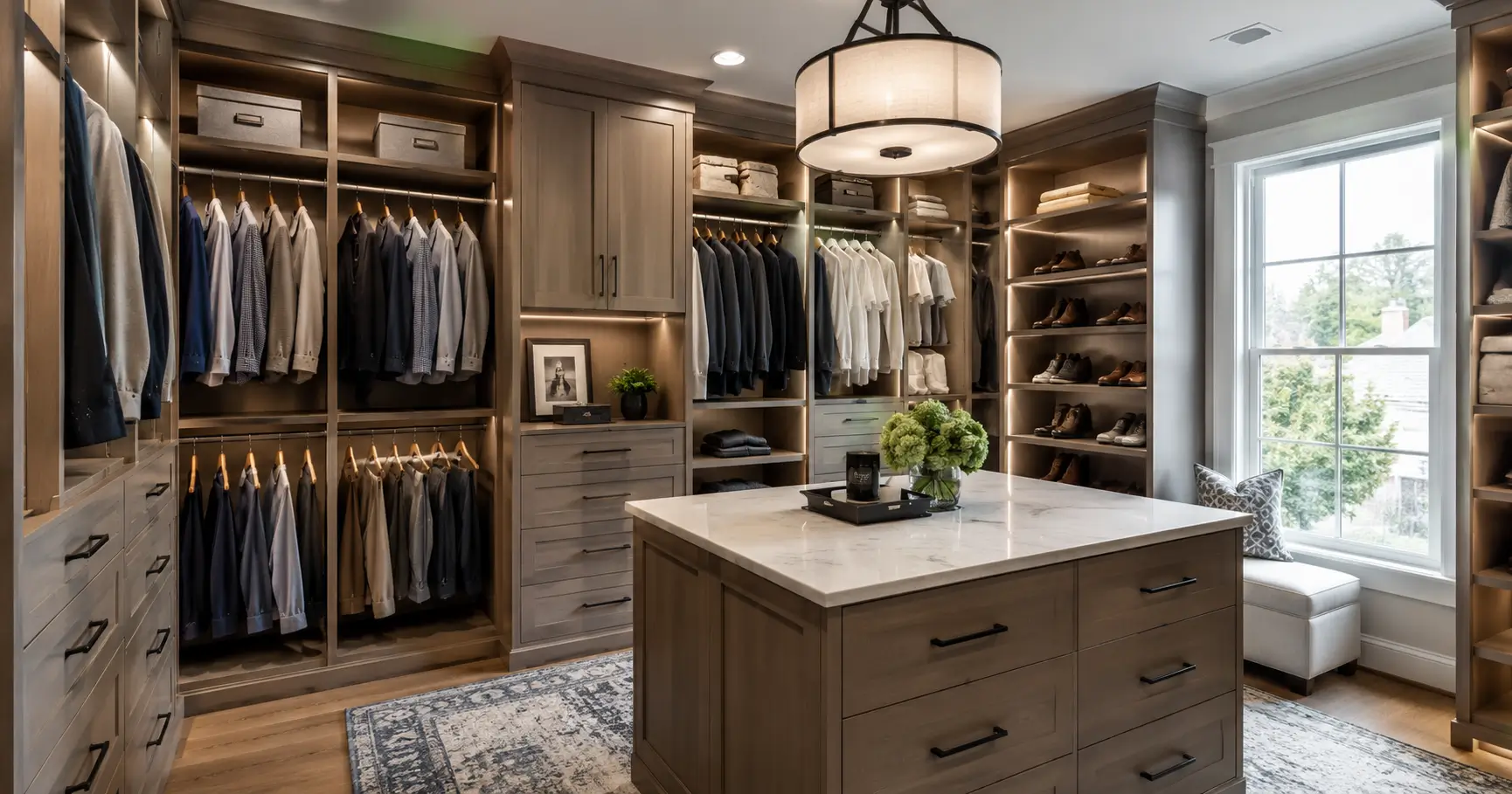
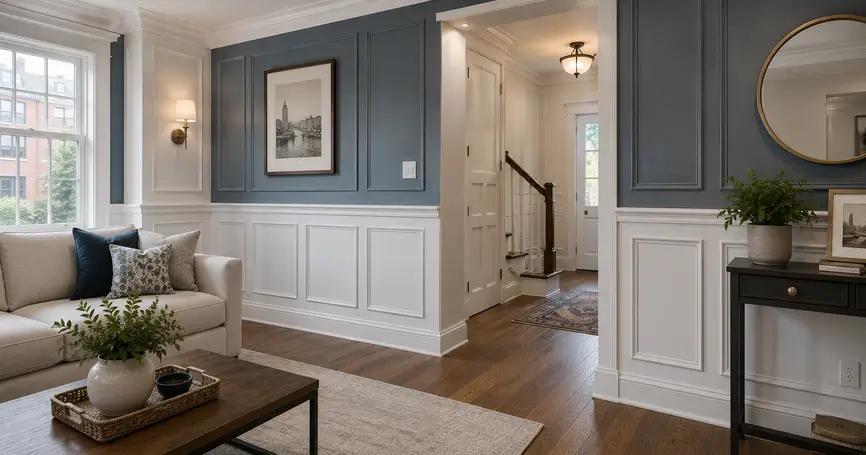
The biggest decision in a custom cabinet project usually isn’t the color or the door style. It’s whether you’re building paint-grade or stain-grade. That single choice drives the wood species, the finish, the durability, and a chunk of the cost — and the terms get thrown around without anyone explaining them.
So here’s a cabinet maker’s breakdown: what each one actually means, what it costs, how it holds up, and how to pick the right one for your home.
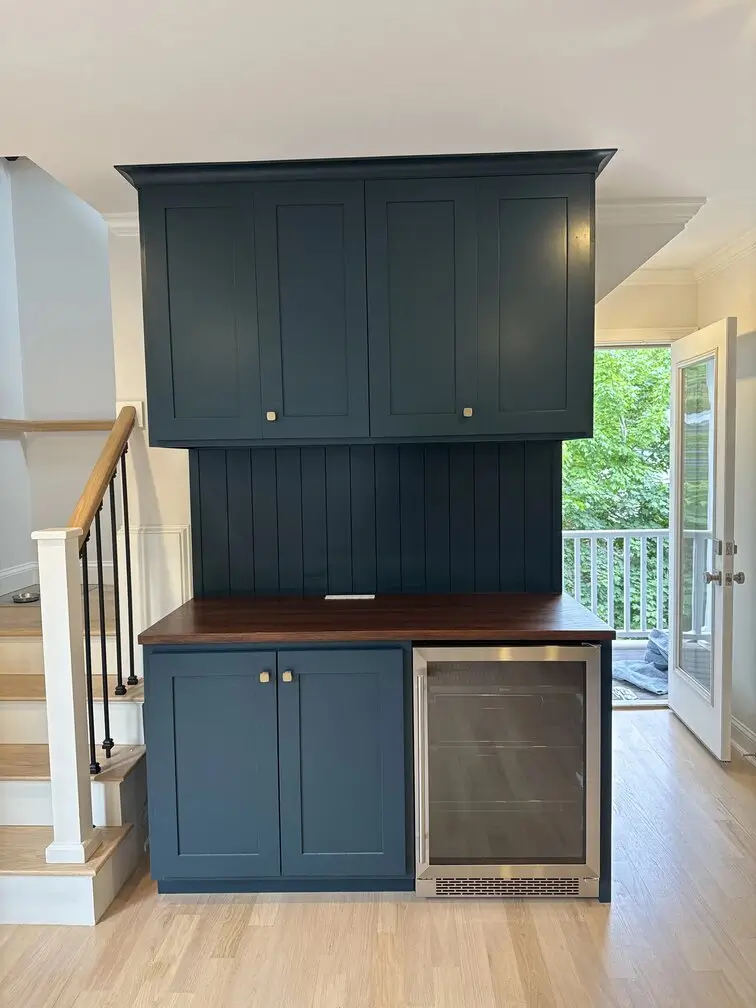
Key Takeaways
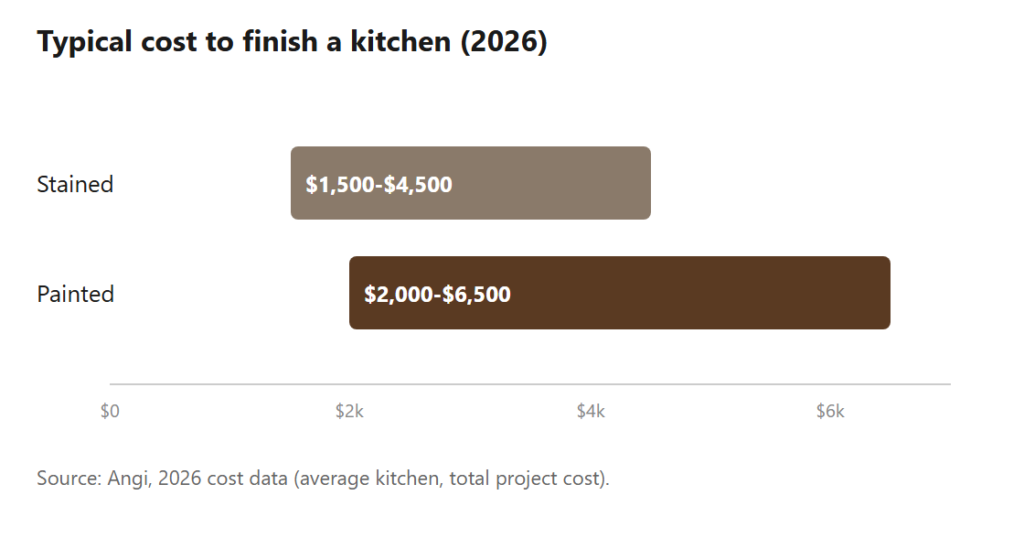
- Painted cabinets generally cost more than stained — Angi’s 2026 data prices painting an average kitchen at about $2,000–$6,500 versus $1,500–$4,500 to stain (Angi, 2026).
- Paint-grade uses smooth, tight-grained woods (poplar, soft maple, birch) or MDF to hide grain; stain-grade uses figured hardwoods (white oak, walnut, cherry, hickory) to show it off.
- Stain-grade hides nicks and wear better over time; quality painted finishes are durable but show chips and seasonal hairline cracks at joints more readily.
- A painted perimeter with a stained island is a popular, budget-smart hybrid.
What’s the difference between paint-grade and stain-grade?
Paint-grade means a smooth, grain-hiding material built for an opaque finish; stain-grade means a figured hardwood meant to show its grain. The difference starts with the wood, not the color. Paint-grade prioritizes a flat, knot-free surface so paint lays down seamlessly. Stain-grade does the opposite — it puts the natural grain and texture on display under a translucent finish.
That’s why the choice changes everything downstream. Once you commit to showing the wood, species selection matters enormously. Once you commit to hiding it, you optimize for a flawless painted surface instead. Same cabinet box, two very different material paths.
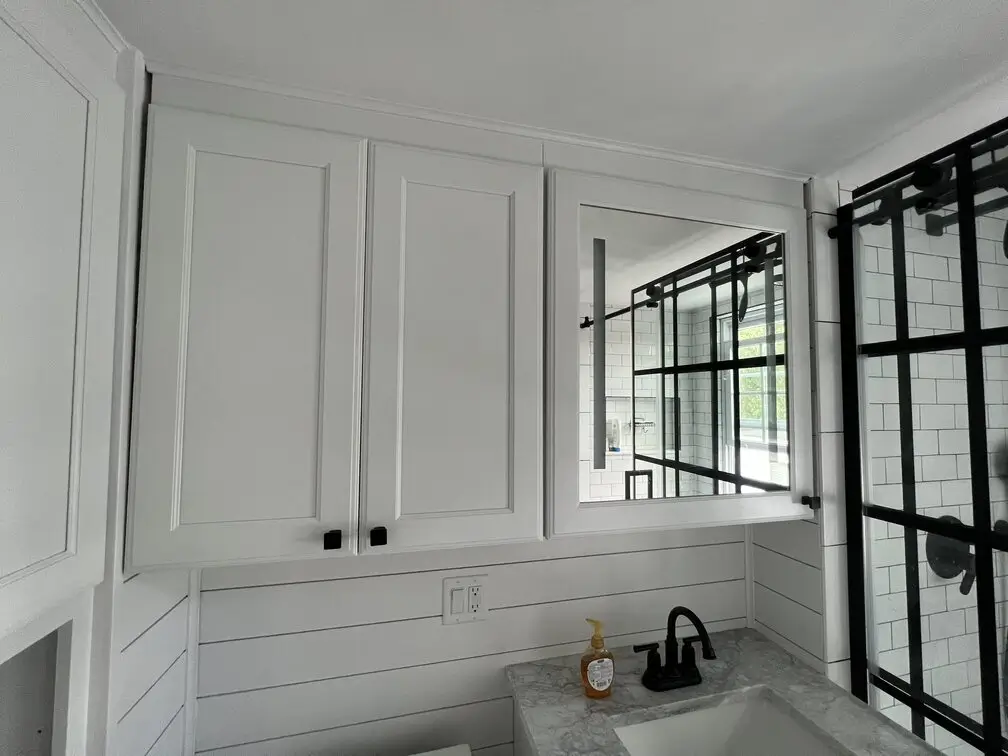
Which wood species are used for each?
Paint-grade cabinets use poplar, soft maple, birch, or MDF and veneered plywood; stain-grade cabinets use white oak, cherry, walnut, hickory, and similar figured hardwoods. The logic is simple — paint-grade species are chosen for a smooth, stable surface, while stain-grade species are chosen for the grain you’ll actually see.
MDF earns its place in paint-grade work because it has no grain to telegraph and stays dimensionally stable, which is why it’s common for center panels. Stain-grade leans on solid hardwoods because the figure is the entire point. The table below sorts the common species.
| Species | Best for | Relative cost | Notes |
|---|---|---|---|
| Poplar | Paint-grade | $ | Smooth, affordable, paints clean |
| Soft maple | Paint-grade | $$ | Tight grain, durable surface |
| MDF | Paint-grade | $ | No grain, stable panels |
| White oak | Stain-grade | $$$ | Strong grain, on-trend |
| Cherry | Stain-grade | $$$ | Warms and darkens over time |
| Walnut | Stain-grade | $$$$ | Premium, rich figure |
| Hickory | Stain-grade | $$ | Bold grain, very hard |
Are painted or stained cabinets more expensive?
Painted cabinets generally cost more than stained, because a flawless painted finish takes more prep, more coats, and more sanding between them. In 2026, Angi’s cost data pegs painting an average kitchen at roughly $2,000–$6,500, versus $1,500–$4,500 to stain (Angi, 2026). Stain-grade cost, by contrast, swings mostly on species — a white oak or walnut job can land higher than a painted one once you factor the premium hardwood.
So “painted costs more” is true on a like-for-like species basis, but it isn’t the whole story. Choose walnut and the wood itself outruns the paint premium. The table below shows Angi’s 2026 cost ranges for each.
For real budget ranges, see our cabinet pricing guide and the broader cost of custom millwork.
Which holds up better over time?
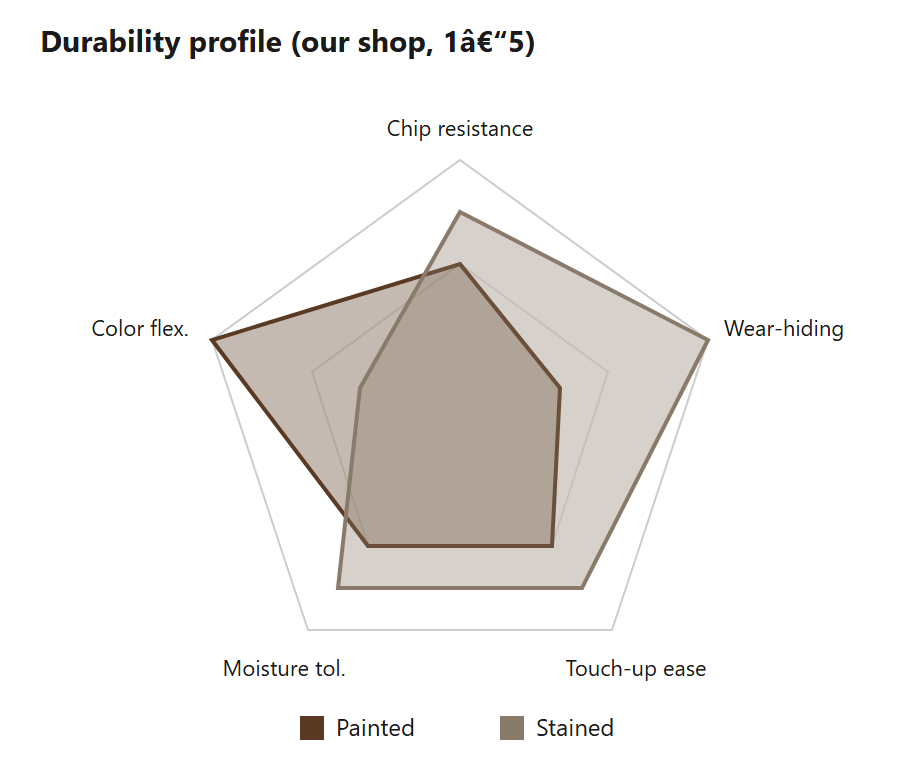
Stain-grade hides everyday wear better, while quality painted finishes are durable but show chips and the occasional hairline crack at joints more readily. Grain and color variation in stained wood camouflage small dings; a solid painted surface shows them. It’s not that paint is fragile — it’s that paint has nowhere to hide a scratch.
From our shop: The painted finishes that fail early almost always fail at the joints — a hairline telegraphs where a rail meets a stile as the wood moves with the seasons. We design around it: stable substrates, MDF center panels where it makes sense, and a conversion-varnish topcoat instead of a wall paint. Do that, and a painted kitchen holds up for years. Skip it, and you’ll see the joints by year two.
New England’s humidity swing is the real test here. Wood expands in a damp August and contracts in a dry January, and a painted finish has to ride that movement without cracking. The table below is our own shop’s read on how the two compare, scored one to five.
Which look fits your style and home?
Paint reads clean, timeless, and color-flexible; stain reads warm, natural, and character-forward. Neither is “better” — they suit different homes. A bright painted shaker kitchen fits a transitional or modern space and lets you commit to a color. Stained wood leans into texture and tends to sit beautifully in older homes.
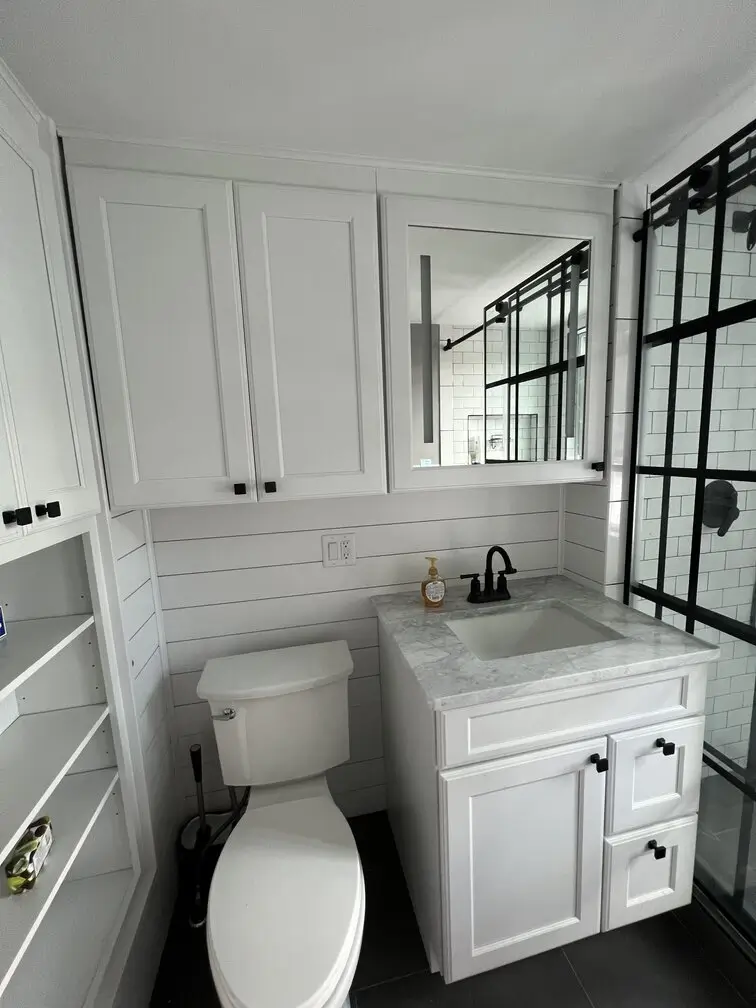
That last point matters in Boston. In a period home, stain-grade hardwood often harmonizes with the existing trim better than paint — it speaks the same material language as the original woodwork. If you’re working on an older property, our guide to millwork in historic and brownstone homes covers how finish choices play against original detail.
Can you mix paint-grade and stain-grade?
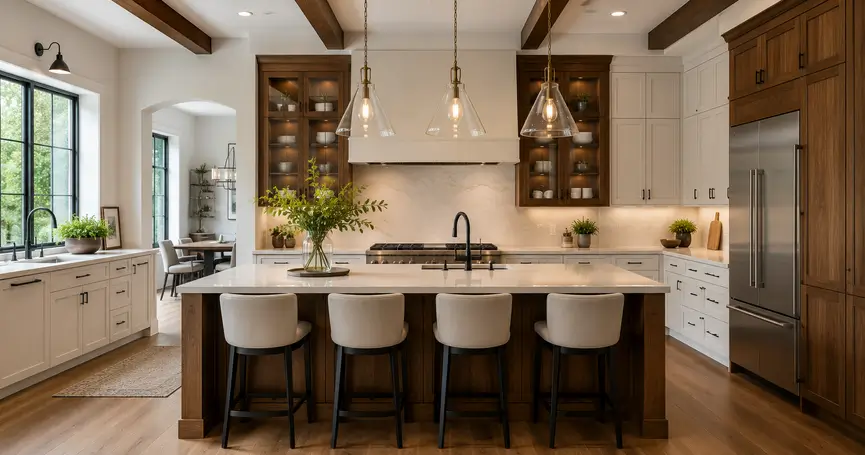
Yes — and it’s one of the smartest moves in custom cabinetry. A painted perimeter with a stained island or feature piece gives you the clean backdrop of paint and a warm focal point of natural wood, often for less than going all-premium-hardwood. You spend the species budget where the eye lands.
The hybrid also hedges your bets on trends. Paint colors date faster than wood does, so a painted perimeter is easy to refresh later while the stained island stays timeless. Few comparison articles mention this, but in our custom kitchen work it’s become one of the most-requested layouts — and it’s a genuinely practical way to balance cost, durability, and style.
How should you choose? A quick framework
Start from your top priority and let it decide. There’s no universal right answer — only the right answer for your budget, your home, and how the space gets used.
- Tightest budget? Stained standard species (or a painted/stained hybrid).
- Maximum durability in a hard-use kitchen? Stain-grade, or painted with a conversion-varnish finish.
- Clean, modern, color-driven look? Paint-grade.
- Older or historic home? Stain-grade usually harmonizes with original trim.
- Want a focal point without the full premium? Hybrid — painted perimeter, stained island.
Not sure which way to go? Talk to our team about your space and we’ll recommend a grade, species, and finish that fits your budget and how you actually live.
Frequently Asked Questions
Do painted cabinets chip easily?
Quality painted cabinets finished with conversion varnish or a 2K topcoat resist chipping well; standard wall-paint finishes don’t. The more common issue is hairline cracking at joints as wood moves seasonally — a finish-system and substrate question, not a flaw in painted cabinets generally. Specify the finish system before you commit.
What’s the best wood for painted cabinets?
Soft maple or poplar for solid components, and MDF for center panels and large flat surfaces. These give the smooth, knot-free, dimensionally stable base a flawless painted finish needs. Heavily grained hardwoods like oak are a poor paint-grade choice because the grain telegraphs through the finish.
Is white oak paint-grade or stain-grade?
White oak is a stain-grade wood — its pronounced, on-trend grain is exactly what you’d want to show, not hide. It sits at the higher end of the cost range. If you love the oak look but want paint, you’d be paying premium-species prices to cover up the feature you paid for.
Which adds more resale value, painted or stained?
Both can add value; finish quality and species matter more than the paint-versus-stain choice itself. A well-built, well-finished kitchen in either direction reads as quality to buyers. U.S. remodeling spend is hitting a record ~$524 billion in early 2026 (Harvard JCHS, 2026), and kitchens remain among the highest-impact projects.
Conclusion
Paint-grade and stain-grade aren’t better or worse — they’re different tools for different homes. Paint gives you a clean, color-flexible, timeless look; stain shows off natural wood, hides wear, and tends to suit older homes. And you don’t always have to pick just one.
- Painted typically costs more than stained on a like-for-like species basis.
- Stain-grade hides everyday wear; painted needs the right finish system to last.
- Hybrids — painted perimeter, stained island — balance cost, durability, and style.
Ready to spec a project? Explore our custom kitchen cabinetry and built-ins, or get a finish recommendation for your space.
Sources
- Angi, How Much Does It Cost to Paint Kitchen Cabinets? [2026 Data], retrieved 2026-06-17, https://www.angi.com/articles/how-much-does-it-cost-paint-kitchen-cabinets.htm
- Angi, How Much Does It Cost to Stain Cabinets? [2026 Data], retrieved 2026-06-17, https://www.angi.com/articles/how-much-does-it-cost-stain-cabinets.htm
- Harvard Joint Center for Housing Studies, Remodeling Growth Set to Downshift in Late 2026 (Leading Indicator of Remodeling Activity), retrieved 2026-06-17, https://www.jchs.harvard.edu/press-releases/remodeling-growth-set-downshift-late-2026