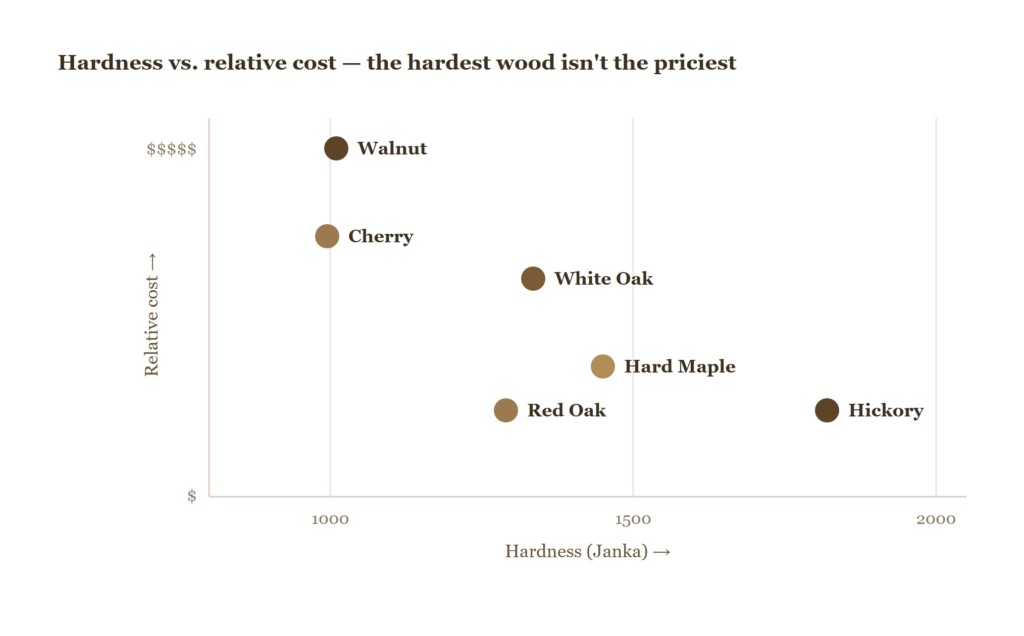
Choosing the wood is the decision that shapes everything else about your cabinetry—how it looks, how it wears, and what it costs. And the numbers surprise people: hickory is nearly twice as hard as cherry on the Janka scale (1,820 versus 995), yet cherry often costs more. Hardness is only one axis. Here is how our Boston millwork shop actually weighs the species behind high-end custom cabinets and built-ins.
Key Takeaways
- There’s no single “best” wood—the right species depends on finish, durability, budget, and look, in that order.
- On the Janka hardness scale, hickory (1,820) and hard maple (1,450) top the list; walnut (1,010) and cherry (995) are softer but premium.
- The hardest wood is rarely the most expensive: walnut and cherry are soft and costly, while hickory is hard and affordable.
- For painted cabinetry, tight-grained species (soft maple, poplar) beat open-grained oak.
What is the best wood for custom cabinetry?
There is no universal best—the right species is the one that matches your finish, durability needs, budget, and design. For most high-end projects the shortlist is white oak, walnut, hard maple, cherry, and hickory, plus dedicated paint-grade woods. Each earns its place for different reasons, and the wrong pairing (say, painting a wood chosen for its grain) wastes both money and material.
Think of it as a sequence, not a single pick. Decide the finish first, because that rules some species in or out. Then weigh how hard the wood needs to be for where it lives, what your budget allows, and finally the look you want. Get that order right and the choice makes itself.
For a sense of how species fits into a whole project, see our custom residential millwork services.
How does wood hardness affect cabinet durability?
Wood hardness is measured by the Janka test, which rates the force needed to dent the wood. Among cabinet species, hickory leads at 1,820 lbf, followed by hard maple (1,450), white oak (1,335), red oak (1,290), walnut (1,010), and cherry (995) (Osborne Wood, Janka scale). Higher numbers resist dents and daily wear better.
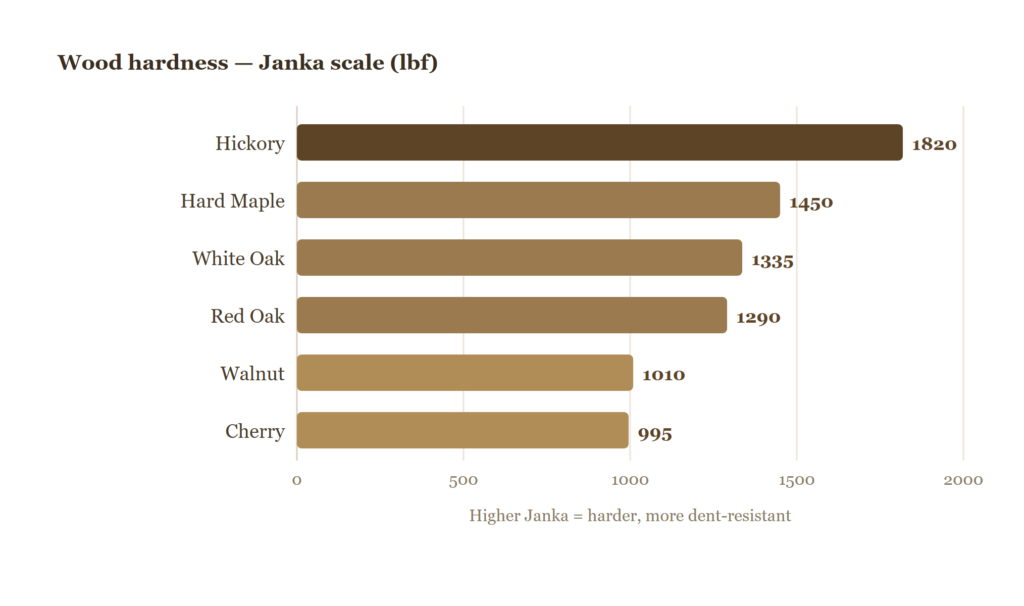
But hardness isn’t the whole story. A softer wood like walnut still makes exceptional cabinetry—doors and fronts rarely take the abuse a floor does. Match hardness to where the piece lives: a mudroom bench wants hickory or maple; a formal library can happily wear walnut.
The best hardwood species, one by one
Five species cover the vast majority of high-end custom work, each with a clear personality. The right one depends on the look you’re after and how the piece will be used.
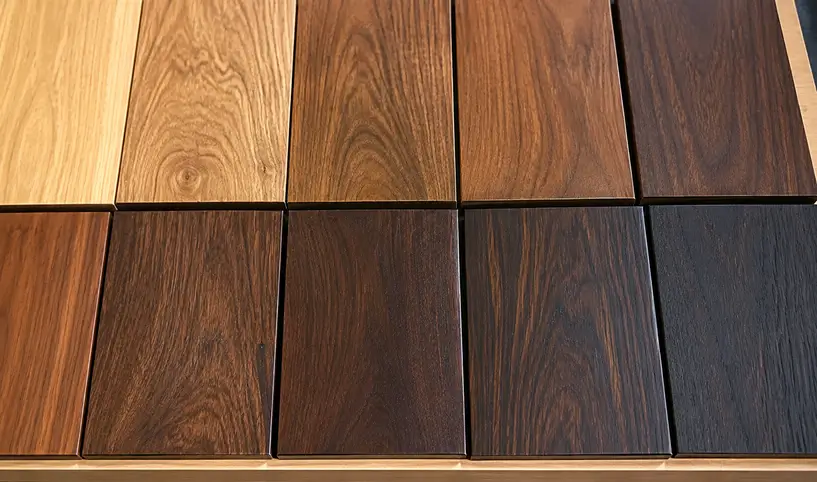
White Oak
Hard (1,335), stable, and endlessly versatile. Quarter-sawn white oak gives the straight, flecked grain prized in both modern and historic interiors. It’s the current darling of high-end kitchens for good reason—it takes stain beautifully and ages gracefully.
Walnut
The premium statement wood: deep chocolate tone, dramatic grain, and a warmth nothing else matches. At 1,010 Janka it’s softer, so it shines where impact is unlikely—libraries, offices, feature cabinetry. Never paint it; its grain is the whole point.
Hard Maple
Tight, uniform grain and a pale, clean surface (1,450). Maple takes clear and natural finishes with almost no imperfections, which is why it’s a workhorse for both contemporary cabinetry and paint-friendly work.
Cherry
Warm, refined, and traditional. Cherry (995) darkens and enriches with age and light, so a freshly installed cherry kitchen deepens into something richer over years. Best for owners who want that living patina.
Hickory
The hardest domestic option at 1,820, with bold, high-contrast grain. Hickory is rugged and characterful—ideal for rustic and transitional homes and high-traffic spaces where durability leads the brief.
Which wood is best for painted vs. stained cabinetry?
The finish decides the wood. Stained cabinetry wants species whose grain is the feature—white oak, walnut, cherry, hickory—so the wood shows through. Painted cabinetry wants the opposite: tight, mild grain that disappears under paint, which is why soft maple, poplar, and MDF panels are the paint-grade standards.
Paint an open-grained wood like red oak and its coarse grain telegraphs through the finish—rarely the look anyone wants. This is the single most common species mistake we correct. If you’re weighing the two finishes, our guide to paint-grade vs. stain-grade cabinetry goes deeper.
How do you choose the right species for your Boston home?
Choose in order: finish first, then durability, then budget, then look. That sequence prevents the expensive mistakes—like buying a statement grain you plan to paint over, or a soft wood for a hard-wearing mudroom. And cost rarely tracks hardness, which is where most homeowners guess wrong.
New England adds one more factor: our humidity swings from damp summers to dry, heated winters move wood more than milder climates do. Properly dried, quarter-sawn, and acclimated stock matters here—a detail that separates cabinetry that stays tight from cabinetry that develops gaps. It’s exactly the kind of thing we account for on every custom kitchen and built-in we build. Species also drives price; see how it factors into our custom millwork cost guide.
Not sure which species fits your project? Bring us your space, your finish, and your budget. We’ll walk you through the right wood for how you actually live—and show you real samples before anything is built. Request your free design-build consultation →
Frequently Asked Questions
What is the best wood for custom cabinets?
There’s no single best—it depends on your finish, durability needs, budget, and look. For high-end stained work, white oak, walnut, and cherry lead; for painted cabinetry, tight-grained soft maple or poplar. Choose the finish first, then the species that suits it.
What is the most durable wood for cabinets?
Hickory is the hardest common cabinet wood at 1,820 on the Janka scale, followed by hard maple at 1,450 (Osborne Wood). Both resist dents well, making them strong choices for high-traffic kitchens and mudrooms.
Which wood is best for painted cabinets?
Tight, mild-grained woods paint best because their grain disappears under the finish. Soft maple and poplar are the standards, along with MDF for panels. Open-grained woods like red oak show their grain through paint, which is usually undesirable.
What wood do high-end cabinets use?
High-end cabinetry favors white oak (especially quarter-sawn), walnut, and cherry for their grain and richness. Hard maple is common for clean, natural, and painted looks. The choice is driven by the design and finish more than by price alone.
Does wood species really change the price much?
Yes. Species is a major cost driver—walnut and cherry sit well above oak and maple, while hickory is surprisingly affordable for its hardness. Because cost doesn’t track hardness, species choice is one of the biggest levers on your budget.
Choose the wood, and the rest follows
The best cabinetry starts with an honest match between wood and life. Pick for your finish and how you’ll use the space, and the species almost chooses itself—whether that’s rugged hickory, refined cherry, versatile white oak, or a walnut showpiece.
Every project we build starts with real samples in your hands and a frank conversation about wear, budget, and light. From custom kitchens to library built-ins, Fabwright Origins helps Greater Boston homeowners, designers, and developers choose materials that look right on day one and better in year ten. See species like these in our project gallery.
Sources
- Osborne Wood, Janka Wood Hardness Scale, retrieved 2026-07-06 — https://www.osbornewood.com/blog/gallery/strongest-wood-type-janka-wood-density-test
Written by Jemuel Stephenson, founder of Fabwright Origins.