Framed or frameless is the first construction question in any custom cabinet project—and the answer shapes the look, the access, and even how the doors are styled. Neither is universally “better.” One gives you full, unobstructed access; the other supports traditional inset doors and a slightly stronger box. Here’s how a Boston cabinet maker compares them.
Key Takeaways
- Framed (face-frame) cabinets are the U.S. traditional standard; frameless (European) are full-access and modern.
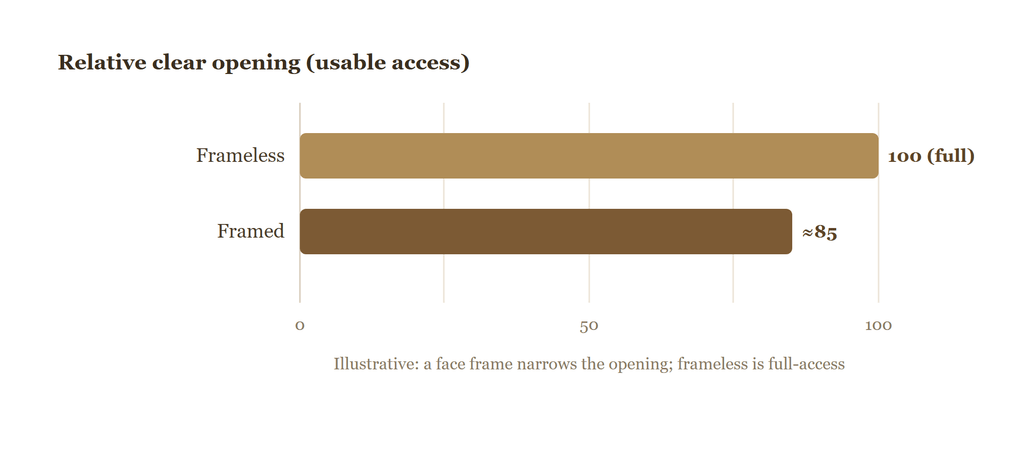
- Frameless offers more usable opening—often around 10–15% more—because there’s no face frame narrowing the box.
- Framed construction supports both inset and overlay doors; frameless is full-overlay only.
- The real choice is style and access, not quality—a good custom shop builds both to a high standard.
What’s the difference between framed and frameless cabinets?
Framed cabinets have a face frame—a flat wood frame attached to the front of the box—while frameless cabinets attach doors directly to the box walls. That single difference drives everything else: access, door styles, hardware, and look. Framed is the long-standing American method; frameless (also called European or full-access) is the standard across much of Europe.
Because a face frame covers part of the box opening, frameless cabinets give you more usable width and easier access to drawers and pull-outs. It’s a modest but real gain—roughly 10–15% more opening in typical boxes.
For a wider look at cabinet terminology, our millwork vs. cabinetry guide sets the context, and This Old House offers a good general primer on cabinet construction.
What are the pros and cons of framed cabinets?
Framed cabinets win on versatility and tradition: the face frame adds rigidity and, crucially, allows both inset and overlay doors. That makes them the go-to for traditional, transitional, and period-accurate kitchens—including the classic inset look that defines many historic Boston homes.
The trade-off is access. The frame slightly narrows the opening and can make reaching into corners or wide drawers a touch tighter. For most homeowners that’s a fair exchange for the styling range and the timeless look.
What are the pros and cons of frameless cabinets?
Frameless cabinets win on access and a clean, modern look: no face frame means full-width drawers, easier reach, and flush, minimal fronts. They’re the natural fit for contemporary and European-style kitchens where simple lines matter.
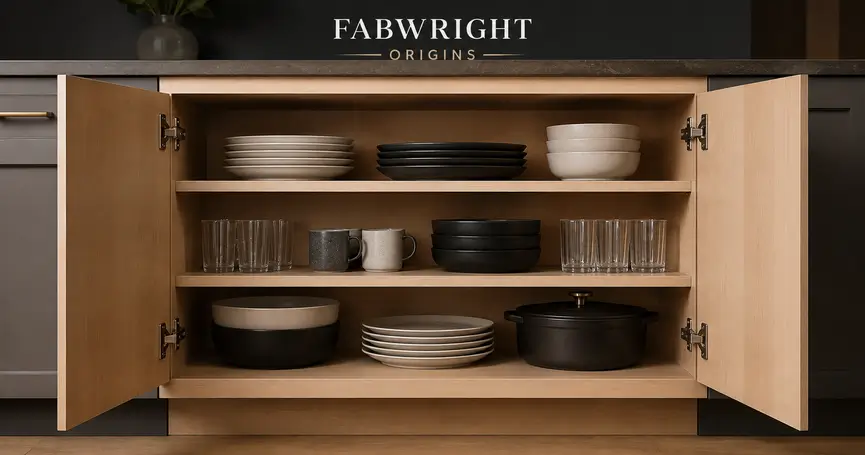
The limits: frameless is full-overlay only, so you can’t get a true inset look, and because there’s no frame, the box and concealed hinges do all the structural work—quality construction matters even more. In a custom shop that’s a non-issue; in cheap stock lines it can be.
Which looks better—and which suits your style?
Style should drive the decision more than anything else. Framed cabinets read traditional to transitional and are the only way to get authentic inset doors; frameless reads contemporary, minimal, and seamless. Both can be gorgeous—they simply speak different design languages.
Your finish and species choices layer on top of that. Whether you’re painting or staining changes the look as much as the construction does—see our guides to paint-grade vs. stain-grade cabinetry and the best wood species for custom cabinetry.
How do you choose—and why does custom beat stock either way?
Choose by matching construction to your style and access needs: framed for traditional and inset looks, frameless for modern full-access. Then weigh the attributes side by side. The chart below shows how the two compare across the factors that matter most.
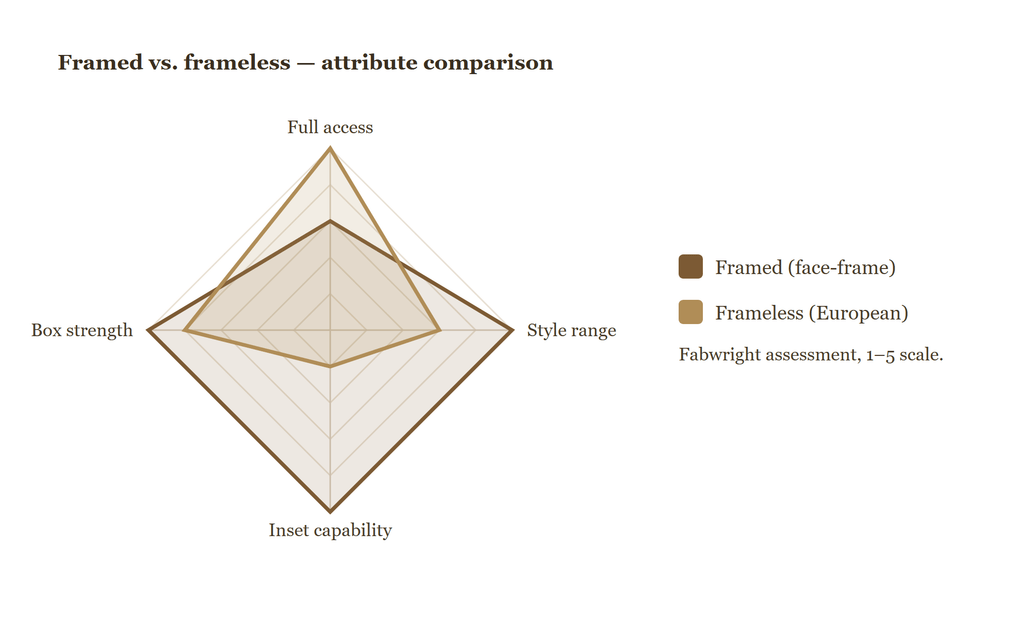
The deciding factor most stock buyers miss: construction quality matters more than the framed/frameless label. A custom shop builds both to furniture standards—dead-flat faces, tuned hinges, boxes that stay square. If you’re vetting makers, our guide on how to choose a custom cabinet maker in Boston covers the questions to ask.
Not sure which construction is right for you? Bring us your style and your space—we build both framed and frameless to furniture-grade standards and will steer you to the right one for your kitchen. Request your free design-build consultation →
Frequently Asked Questions
What is the difference between framed and frameless cabinets?
Framed cabinets have a face frame on the front of the box; frameless cabinets attach doors directly to the box walls. Framed is the U.S. traditional standard and supports inset doors, while frameless (European) offers full access and a modern, seamless look.
Are frameless cabinets better than framed?
Neither is universally better. Frameless gives more usable access and a contemporary look; framed offers more door-style options (including inset) and a traditional feel. The right choice depends on your style and how you use the space, not on quality alone.
Do frameless cabinets cost more?
Cost depends more on materials, finish, and shop than on construction type. Frameless can require higher-grade boxes and hinges since there’s no face frame for support, but in custom work the price difference is usually modest compared with species and finish choices.
Which is more durable, framed or frameless?
Framed cabinets have a slight structural edge from the face frame, but a well-built frameless cabinet with quality boxes and hinges is extremely durable. In custom construction, both last for decades; durability comes down to build quality more than type.
Can you get inset doors with frameless cabinets?
No. True inset doors require a face frame to sit within, so they’re a framed-only option. Frameless cabinets are full-overlay, giving a flush, modern look but not the recessed inset appearance.
Framed or frameless, built to last
The framed-versus-frameless choice comes down to style and access, not quality. Go framed for traditional looks and inset doors; go frameless for full access and clean, modern lines. Either way, construction quality is what makes a cabinet feel custom.
Fabwright Origins builds both to furniture-grade standards for Greater Boston homes. Explore our custom kitchen cabinetry and built-ins, or browse our finished projects to see both constructions in real kitchens.
Sources
- This Old House, All About Kitchen Cabinets, retrieved 2026-08-04 — https://www.thisoldhouse.com/kitchens/all-about-cabinets
Written by Jemuel Stephenson, founder of Fabwright Origins.