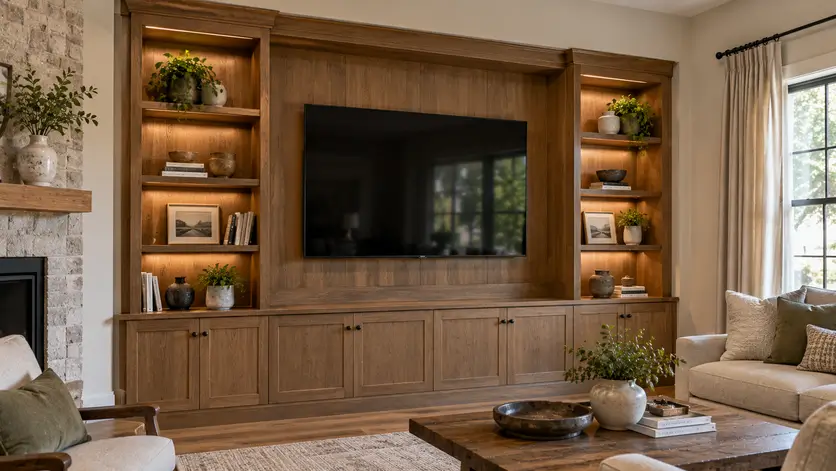
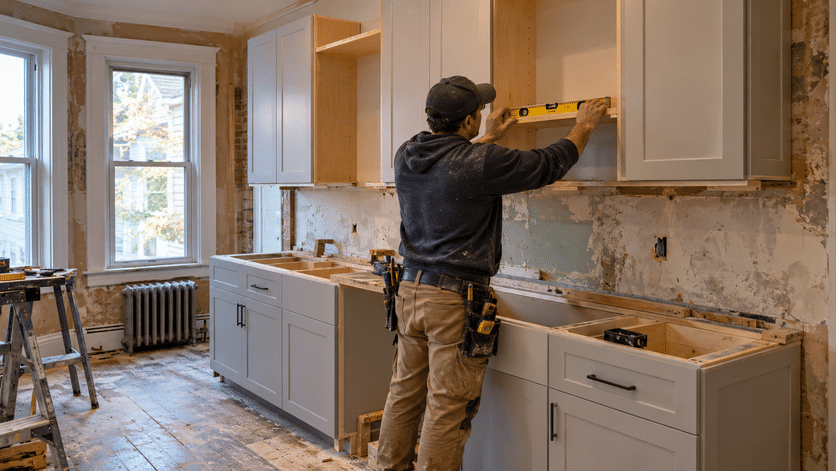
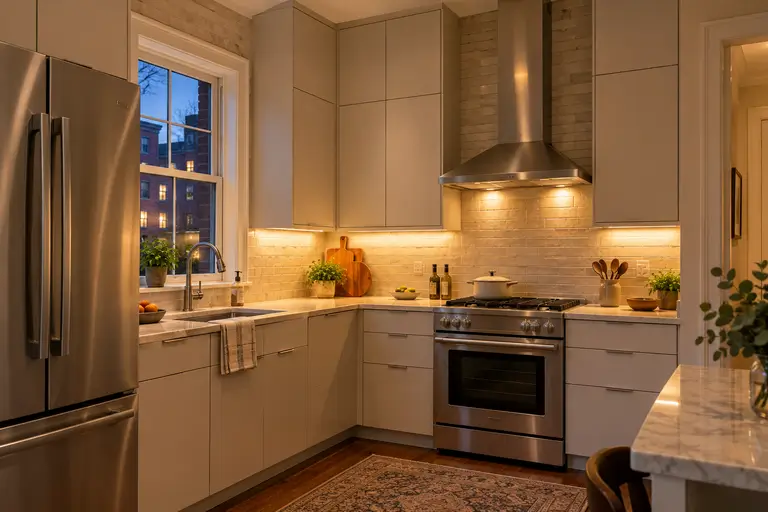
Wall and ceiling millwork is the fastest way to make a room feel architectural instead of built. And it’s more attainable than most people assume: wainscoting and wall paneling run $10 to $40 per square foot installed and typically return 50% to 70% of their cost at resale (HomeAdvisor; Angi). Here’s how the pieces—wainscoting, full paneling, and coffered ceilings—actually work.
Key Takeaways
- Wainscoting treats the lower wall, paneling can cover a full wall, and coffered ceilings add a grid of beams overhead.
- Installed cost runs $10–$40 per sq ft; a typical wainscoting project lands near $1,325 (HomeAdvisor, 2025).
- Coffered ceilings run $1,500–$6,000 for a 150 sq ft room, depending on material and height.
- Wall millwork returns roughly 50–70% at resale—classic styles and neutral finishes maximize it.
What is architectural wall millwork?
Architectural wall millwork is custom trim and paneling that becomes part of a room’s structure rather than decoration applied to it. The three most common forms are wainscoting (paneling on the lower portion of a wall), full wall paneling (floor-to-ceiling or feature-wall treatments), and coffered ceilings (a grid of recessed panels framed by beams overhead).
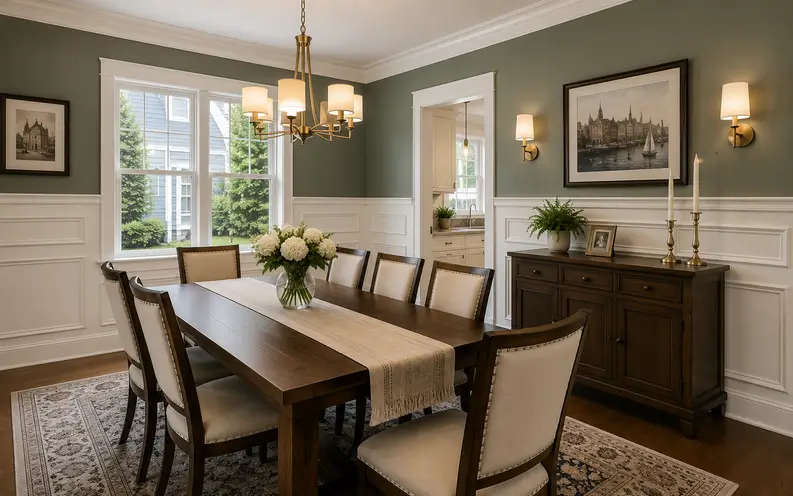
Done well, these treatments read as though they were always part of the house. That’s the whole craft: proportion, rail heights, and panel layout that suit the room’s architecture. For the broader category, see our overview of architectural millwork.
What are the types of wainscoting and wall paneling?
There are five workhorse styles, and the right one is mostly a question of formality. From most traditional to most casual: raised panel, flat (recessed) panel, beadboard, board and batten, and decorative overlay. Each sets a different tone and carries a different price.
Raised panel
The most traditional and formal—a center panel that projects from its frame, common in libraries, dining rooms, and period homes.
Flat (recessed) panel
A clean, Shaker-style recessed panel that reads transitional to modern. The most flexible choice for contemporary interiors.
Beadboard
Narrow vertical boards with a casual, cottage feel—at home in mudrooms, baths, and kitchens.
Board and batten
Vertical battens over a flat base, versatile across styles and scalable from wainscot height to full walls.
Overlay
A raised panel with an added center detail—the most decorative and, accordingly, the most involved to build.
How much does wainscoting and wall paneling cost?
In 2025, wainscoting and wall paneling cost $10 to $40 per square foot installed, with a typical project running $1,050 to $2,400 (around $1,325) (HomeAdvisor, 2025). Price rises with panel complexity, wall size, height, and species.
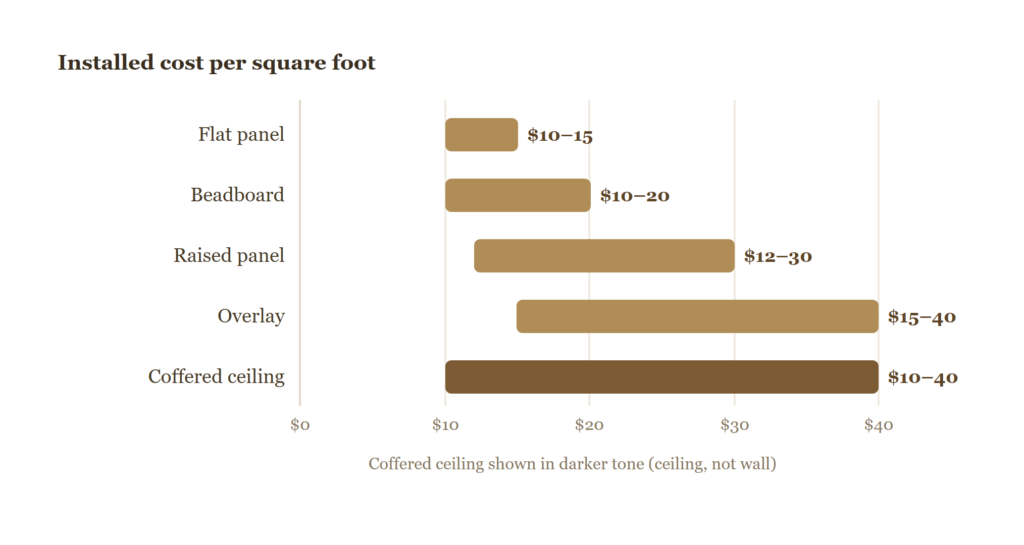
Simpler flat-panel and beadboard treatments sit at the low end; raised-panel and overlay work climbs with the joinery involved. For how wall millwork fits a full-project budget, see our custom millwork cost guide.
How much do coffered ceilings cost, and where do they work?
Coffered ceilings cost $10 to $40 per square foot installed—about $1,500 to $6,000 for a 150-square-foot room—with materials ranging from $2 to $30 per square foot depending on species (HomeGuide, 2025). Walnut and other hardwoods sit at the top of that range.
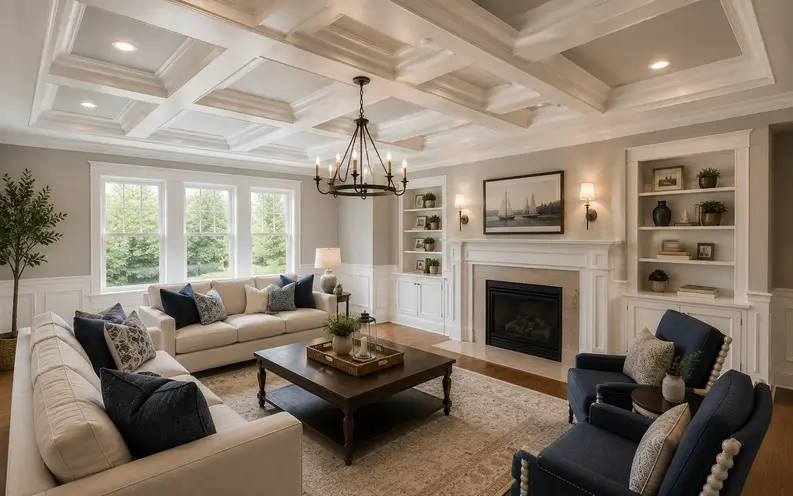
Coffered ceilings earn their keep in rooms with height to spare—dining rooms, studies, and primary suites—where the grid adds depth and a sense of permanence. In lower rooms, a shallower coffer or a simple beam layout keeps the ceiling from feeling heavy.
Does wall millwork add resale value?
Wall paneling typically recoups 50% to 70% of its cost at resale, with classic styles and neutral finishes returning the most (Angi). The value isn’t only the dollar figure—quality millwork signals a well-built home in ways paint and wallpaper can’t.
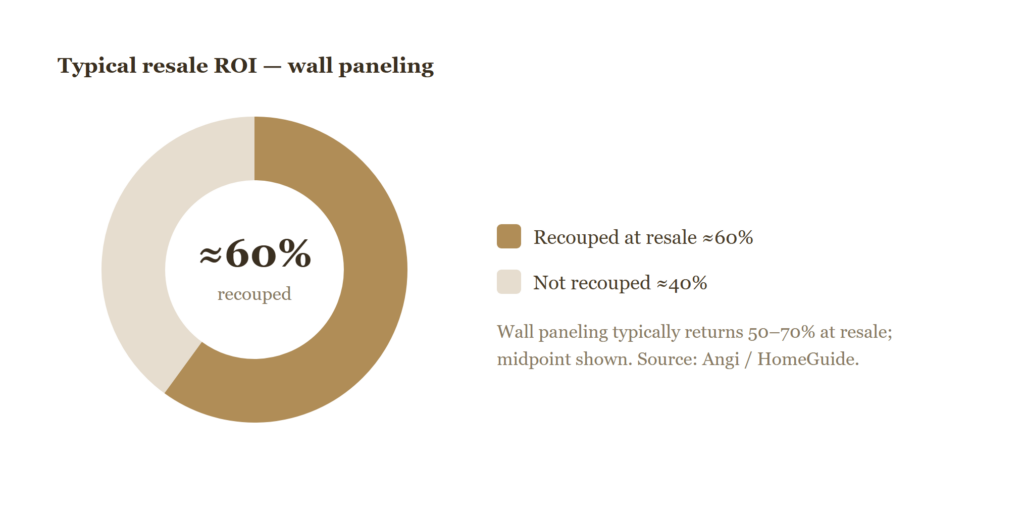
For owners planning to stay, the return is daily rather than at sale: rooms that simply feel better to live in. Either way, the move is to choose enduring styles over trend-driven ones.
Wall millwork for Boston’s historic and period homes
In older Boston homes, the goal is millwork that matches the house’s original proportions—rail heights, panel widths, and profiles true to the period. This is where machine-made kits fall short and custom work earns its place, because the walls themselves are rarely straight.
We scribe paneling to out-of-square walls and match existing profiles so new work disappears into the old—hands-on craft central to how our Boston shop works. It’s the same discipline behind our millwork for Boston’s historic and brownstone homes, and it extends across our residential millwork services and custom built-ins.
Add architecture to your walls and ceilings. Tell us the room and the look you’re after—period-accurate or clean and modern—and we’ll design wainscoting, paneling, or a coffered ceiling built to your home’s exact proportions. Request your free design-build consultation →
Frequently Asked Questions
What is the difference between wainscoting and paneling?
Wainscoting is paneling applied to the lower portion of a wall, usually topped with a chair rail, while “wall paneling” can cover a full wall or feature wall. Both use the same panel styles—raised, flat, beadboard—so the difference is mainly how much of the wall they cover.
How much does wainscoting cost?
Wainscoting costs $10 to $40 per square foot installed, and a typical project runs about $1,050 to $2,400 (around $1,325) depending on style and wall size (HomeAdvisor, 2025). Raised-panel and overlay styles cost more than flat panel or beadboard.
Do coffered ceilings add value?
Coffered ceilings cost about $1,500 to $6,000 for a 150-square-foot room and, as part of wall-and-ceiling millwork, typically return 50% to 70% at resale (HomeGuide, 2025). They add the most perceived value in tall dining rooms and studies.
What is board and batten?
Board and batten is a wall treatment of vertical strips (battens) applied over a flat base panel, creating a rhythm of raised lines. It’s versatile across styles and scales from wainscot height to full walls, making it one of the most flexible paneling options.
What rooms are best for wall paneling?
Dining rooms, libraries, stair halls, and offices are classic candidates for wainscoting and paneling, while beadboard suits mudrooms and baths. Coffered ceilings work best in rooms with height—dining rooms, studies, and primary suites.
Millwork that looks original to the house
Wainscoting, paneling, and coffered ceilings are among the highest-impact, best-returning upgrades you can make—roughly 50% to 70% recouped at resale, and far more in daily enjoyment. The difference between good and forgettable is proportion and craft.
Whether you’re restoring a brownstone or bringing warmth to a new build, Fabwright Origins designs and builds wall and ceiling millwork to your home’s exact architecture. Explore our full range of millwork services, or browse finished rooms in our gallery, to see where it fits.
Sources
- HomeAdvisor, How Much Does It Cost to Install Wainscoting?, retrieved 2026-07-06 — https://www.homeadvisor.com/cost/walls-and-ceilings/install-wainscoting-or-beadboard/
- HomeGuide, How Much Does a Coffered Ceiling Cost?, retrieved 2026-07-06 — https://homeguide.com/costs/coffered-ceiling-cost
- Angi, How Much Does It Cost to Panel a Wall?, retrieved 2026-07-06 — https://www.angi.com/articles/cost-to-panel-wall.htm