In the competitive landscape of Greater Boston’s construction and design industries, the ability to balance high-level craftsmanship with aggressive production timelines is a major differentiator. While traditional woodworking remains the foundation of our trade, Computer Numerical Control(CNC) for furniturehas become the engine that drives modern efficiency, allowing local shops to scale without sacrificing the precision that high-end millwork requires.
For architects, designers, and fellow mill workers, understanding the technical integration of CNC isn’t just about automation. It’s about expanding the boundaries of what is possible within a project’s budget and schedule. Let’s look at how specialized CNC fabrication serves as a vital extension for the Boston design and build community.
What Is CNC for Furniture?
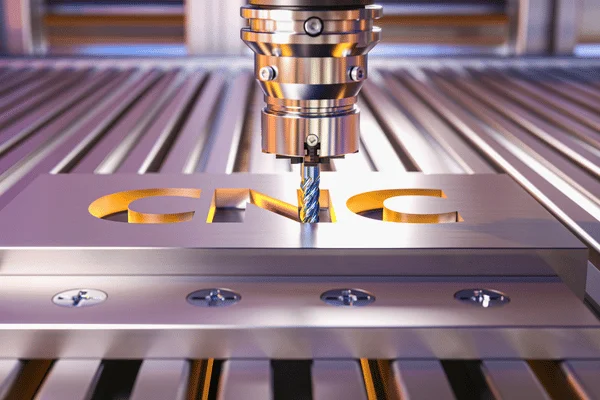
At its core, CNC is the process of using software-driven machinery to execute subtractive manufacturing with extreme accuracy. Unlike manual routing, CNC translates high-fidelity CAD (Computer-Aided Design) files directly into machine code. This allows for the automated cutting, drilling, and shaping of components with tolerances as tight as 0.001 inches.
In the context of furniture and millwork, this means moving beyond the limitations of jigs and hand tools. A 3-axis or 5-axis CNC routercan process large-format panels and solid stock simultaneously, ensuring that every joint, pocket, and profile is identical to the digital model. For the modern shop, this technology acts as a force multiplier, reducing the margin for human error and optimizing material yield.
Why CNC Is Essential for Modern Projects
Tight deadlines and high standards characterize the market; that’s why relying solely on manual production for large-scale furnitureor cabinetryoften leads to bottlenecks. Integrating CNC into your workflow is essential for staying resilient in this environment.
Unmatched Precision for Complex Joinery and Profiles
As contemporary furniture design trends toward warm minimalism and integrated hardware, the demand for complex joinery has increased. CNC technology allows for the precise execution of blind mortise-and-tenon joints, dovetails, and intricate mitered corners that would be prohibitively expensive to produce by hand at scale. This precision ensures that components fit together perfectly on-site, reducing the need for field adjustments.
Repeatability and Scalability for Multi-Unit Rollouts
Whether you are producing twenty reception desks for a corporate headquarters or five hundred cabinetrysets for a Seaport development, every piece must be identical. CNC technology guarantees uniformity across every production run. Once a file is programmed, the machinecan replicate the design indefinitely, ensuring that “Unit 1” and “Unit 500” share the same dimensions and quality.
Accelerated Timelines in the High-Demand Boston Market
By leveraging automated processes, Boston fabrication shops can drastically reduce lead times. Tasks that take hours on a traditional table saw like boring hinge holes, cutting complex curves, or nesting dozens of parts can be completed in minutes on a CNC. This efficiency allows designers to move from prototype to final delivery in a fraction of the time.
Common Applications of CNC for Furniture in Custom Millwork
The versatility of CNC technology makes it applicable across various sectors of the industry. It is no longer reserved for mass-produced flat-pack items; it is now a staple of high-end custom work.
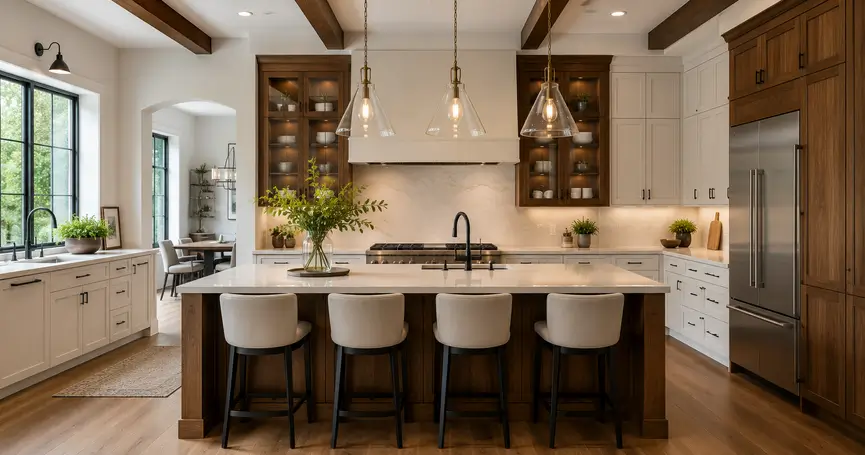
- Cabinet Components: From face frames to carcasses, CNC routers handle nested-base manufacturing, maximizing material usage and pre-drilling all hardware holes.
- Retail and Commercial Fixtures: Complex point-of-sale desks and display kiosks often require non-linear shapes that are easily carved with 3D CNC.
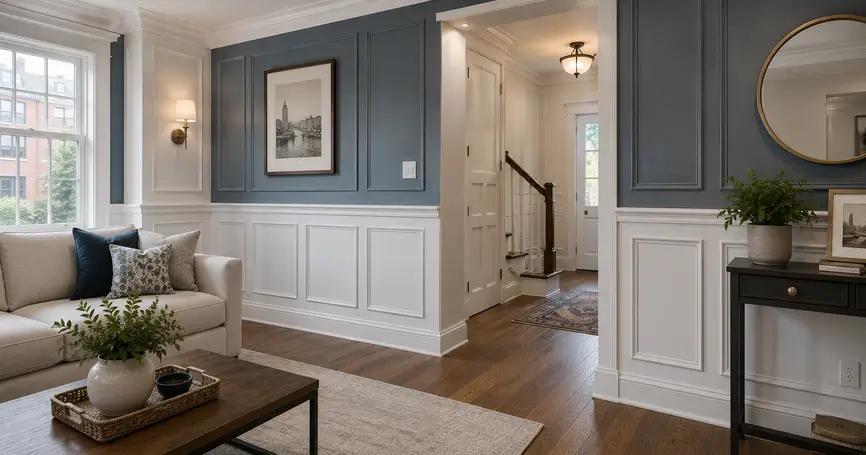
- Built-ins and Architectural Elements: Custom wall paneling, radiator covers, and intricate ceiling baffles benefit from the speed of digital cutting.
- Prototyping: Designers can rapidly test fit and finish with scale models or full-sized mockups before committing to expensive material runs.
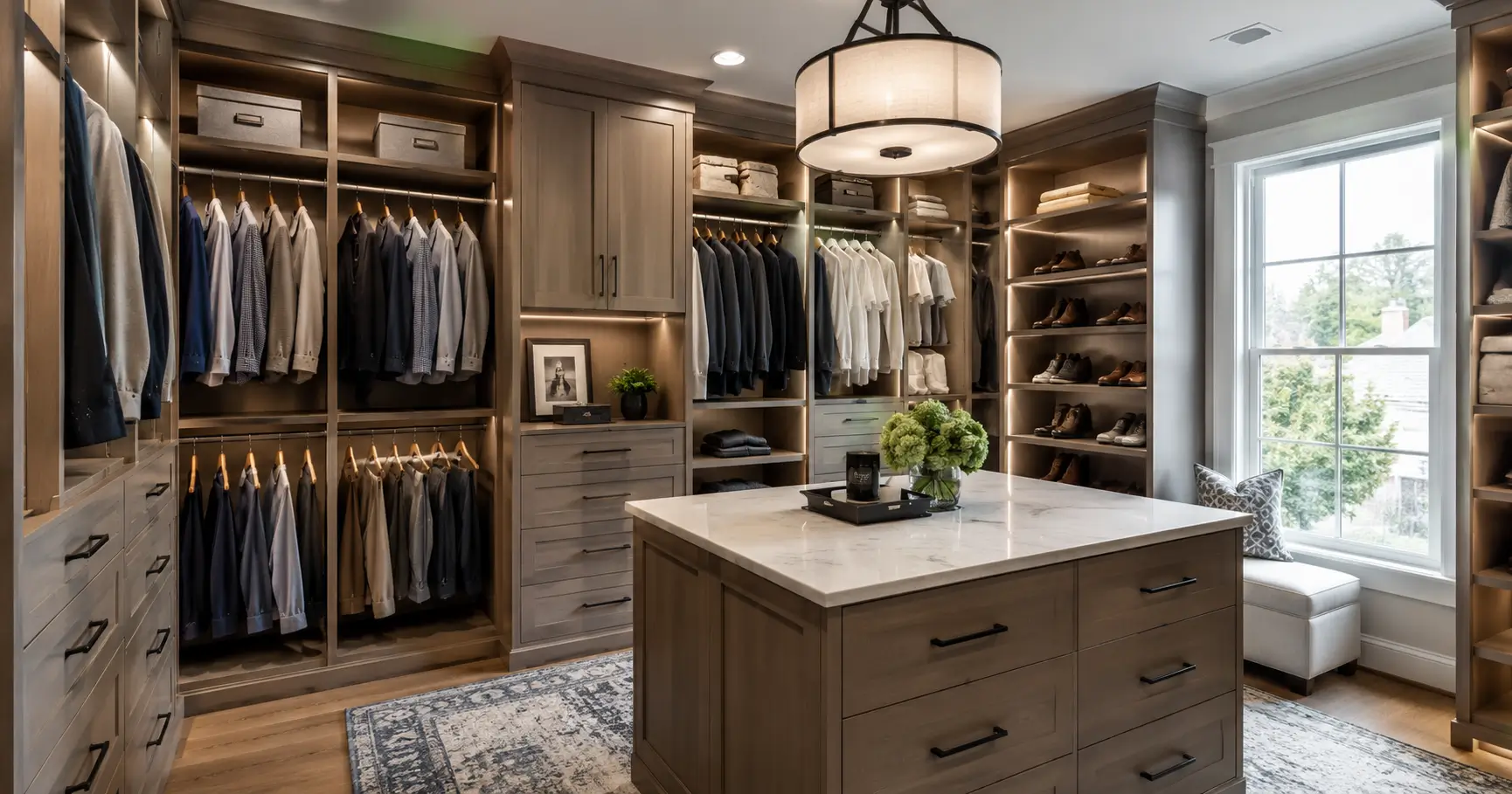
What ties these applications together is precision and repeatability. CNC fabrication reduces material waste, shortens production timelines, and ensures components fit together cleanly during installation. For custom furnitureand millwork shops, that translates into better quality control and more predictable project outcomes.
Material Versatility: From Hardwoods to High-Performance Composites
One of the greatest strengths of modern CNC equipment is its ability to process a wide range of substrates. While plywood and MDF are the workhorses of the industry, a professional CNC partner can handle much more:
- Hardwoods & Softwoods: Precision surfacing and shaping of solid oak, maple, walnut, and pine.
- Plywood & Veneered Panels: Efficient nesting of Baltic Birch or pre-finished maple for cabinetry.
- Composites: Machining of HPL (High-Pressure Laminate), phenolic panels, and solid surface materials like Coriano.
- Plastics & Acrylics: Clean cutting of signage components or decorative furniture inserts.
This flexibility allows designers and fabricators to combine materials within a single project without sacrificing accuracy. Whether the goal is structural strength, visual warmth, moisture resistance, or a modern finish, CNC technology adapts to the material rather than limiting design choices. For custom millwork in Boston, that means greater creative freedom paired with reliable, repeatable results.
Strategic Outsourcing: When to Partner with a CNC Specialist
Not every shop needs to own a half-million-dollar CNC setup to benefit from the technology. In fact, many successful commercial millworkers and builders in Boston choose to outsource their CNC needs. Partnering with a specialist makes sense when:
- You Have Shop Overflow: During peak seasons, your internal team may be at capacity. Outsourcing the heavy lifting of panel processing frees up your skilled craftsmen for assembly and finishing.
- Specialized Machining is Required: If a project requires 5-axis movements or specialized 3D carving that your current equipment can’t handle.
- You Want to Reduce Overhead: Outsourcing eliminates the need for expensive machinery maintenance, specialized software licenses, and the high cost of industrial floor space in the Greater Boston area.
Outsourcing isn’t a sign of limitation; it’s a way to scale intelligently. By leveraging a CNC partner for precision cutting and machining, shops can increase throughput, maintain quality control, and take on larger or more technically demanding projects without expanding fixed costs.
Best Practices for Working with a CNC Fabrication Partner
To get the best results from your CNC partner, clear technical communication is key. Successful collaboration starts with well-prepared files and realistic expectations.
- Provide Clean CAD Files: Most shops prefer .DWG or .DXF files. Ensure your vectors are closed, and your layers are clearly labeled for different operations (e.g., “Cut,” “Pocket,” “Drill”).
- Define Tolerances Early: If your project requires an interference fit or specific hardware clearances, specify those tolerances in your documentation.
- Material Specification: Clearly state the material’s thickness and type. Remember that 3/4-inch plywood is rarely a true 0.75″, so digital designs must account for actual material thickness.
When files are organized and specifications are clearly defined, production moves faster, and errors decrease significantly. Strong upfront coordination reduces rework, protects timelines, and ensures the finished components integrate smoothly during assembly and installation.In custom commercial millwork, precision at the planning stage directly determines efficiency in the field.
Maximizing ROI Through Digital Fabrication
Utilizing CNC for furniture is a strategic move for your bottom line. By optimizing the nesting of parts on a sheet, softwarecan reduce material waste by 20% or more compared to manual layout.
Furthermore, the reduction in labor hours per unit allows you to bid more competitively on large-scale commercial contracts. When you reduce rework and field-fit issues, your project’s overall ROI increases significantly.
Final Thoughts on CNC for Furniture in Boston
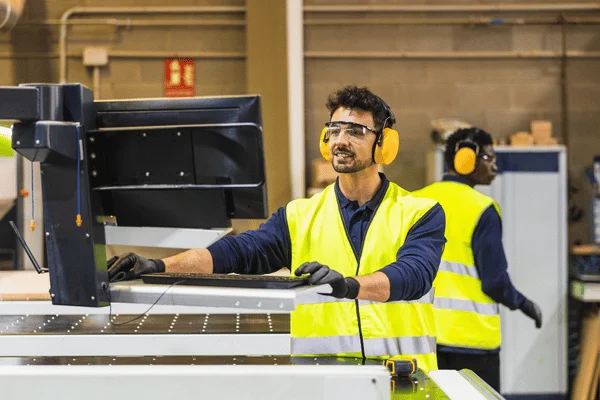
Incorporating CNC technology into your workflow is not just about keeping up with trends; it is about refining the way we build. By combining the soul of traditional craft with the precision of digital fabrication, the Boston millwork commun
ity is producing furniturethat is more durable, more complex, and more efficient than ever before.
Whether you are looking to prototype a new design or scale your production for a major commercial installation, leveraging a dedicated partner can elevate the quality of your output while protecting your margins.
If you need reliable CNC fabrication support in Boston, Fabwright Origins is ready to collaborate. Send us your drawings or project specs, and we’ll help you move from file to finished components with clarity and precision.
Frequently Asked Questions
1. What types of furniture can be made using CNC technology?
CNC machines are versatile enough to produce everything from standard cabinetry and office desks to complex 3D-curved chairs and intricate retail fixtures. Because the machine follows digital instructions, it can handle both the structural carcass work and the fine decorative engraving required for high-end custom pieces.
2. What is the typical turnaround time for outsourced CNC projects?
Turnaround times vary based on project scope, but most standard panel processing or component cutting can be completed within 5 to 10 business days. For designers and builders in the Greater Boston area, local outsourcing significantly reduces lead times compared to shipping from national vendors.
3. How does CNC improve the quality of custom millwork?
CNC improves quality by eliminating the minute inconsistencies of manual work. It allows for nested joinery that is physically impossible to cut by hand with the same tight tolerances, resulting in stronger, more durable furniture that assembles seamlessly on-site.
4. Is CNC cost-effective for small one-off projects?
While CNC excels at repeatability, it is also highly effective for one-off custom furniture that involves complex geometry. The initial setup or programming fee is the primary cost driver for small runs; however, the precision gained often offsets the labor required to make the same intricate cuts manually.
5. Which materials work best for CNC furniture?
The most common materials are plywood (Baltic Birch), MDF, and solid hardwoods like Oak or Maple. However, CNC routers can also process specialized materials such as acrylic, high-pressure laminates, and certain non-ferrous metals, making them ideal for mixed-material furniture designs.